Can Florida Residents Get a Tan Through Screen Enclosures?
Living in Florida means sunshine almost every day, and many homeowners want to enjoy that sunshine from the comfort of a screen enclosure around their pool or patio. A common question we hear at BSS Exteriors is simple but important. Can you still get a tan through a screen enclosure, or does the screen block it out completely? The answer is not a straightforward yes or no. It depends on the type of screen material, the mesh density, and even the angle of the sun.
Below, we will break it all down so you can understand how your screen affects tanning and how to make the most of your outdoor space.
Understanding Screen Enclosures
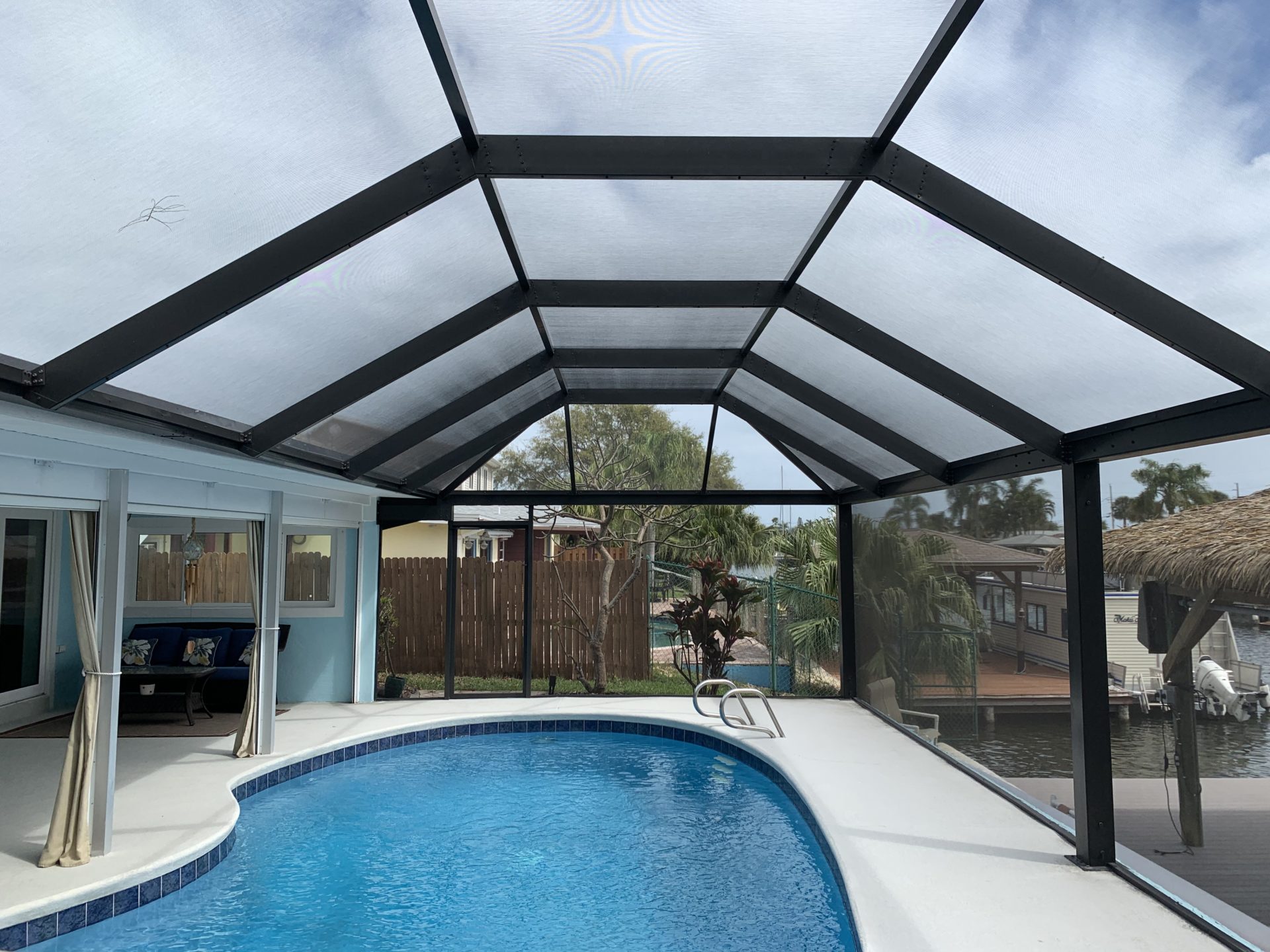
Screen enclosures are extremely popular across Florida because they offer the best of both worlds. You get fresh air and outdoor views with added protection from insects, debris, and harsh sun exposure.
Most pool and patio enclosures are built with aluminum framing and specialized screen fabric. That screen is designed to:
- Reduce glare and harsh sunlight
- Keep out insects and small debris
- Allow airflow and visibility
- Provide some level of UV protection
Not all screen fabrics are the same. Different products are made with different fibers, coatings, and mesh densities. Some are designed for maximum visibility. Others are made to block more sun and heat. Understanding how your screen is built is the key to knowing what it will do to your tanning potential.
Answering The Question: Can You Get a Tan Through a Screen Enclosure?
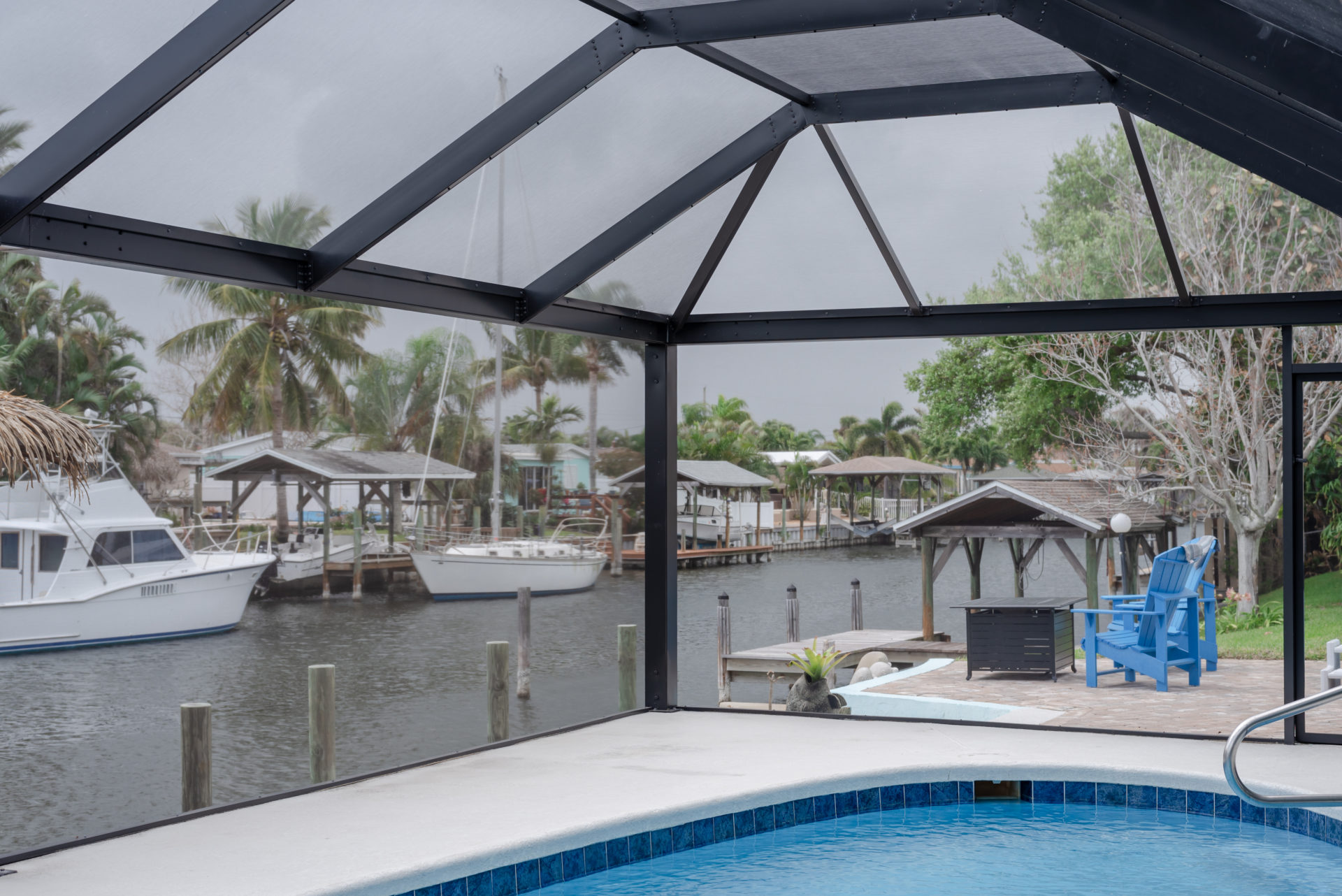
The short answer is often yes, but it depends. You can usually still tan through a typical pool or patio screen, but the process can be slower and less intense compared to direct sun.
Here are the three big factors that matter.
1. Screen Material
Different screen fabrics filter sunlight differently. Many standard screens will block a portion of UV rays but not all of them. This means:
- Some UVA rays, which are responsible for skin aging and also contribute to tanning, can often pass through
- UVB rays, which play a strong role in burning and tanning, may be reduced more significantly depending on the product
If your screen is specifically labeled as a solar screen or high UV blocking screen, it will reduce your tanning ability more than a basic insect screen.
2. Mesh Density
Mesh density is often described in terms like 18 x 14 or 20 x 20, which refers to how many strands of screen material are in each square inch. The tighter the weave, the more sunlight and UV the screen can block.
A tighter mesh:
- Blocks more light and heat
- Reduces glare
- Can noticeably slow down tanning
A more open mesh:
- Lets in more light
- Allows a bit more UV through
- May allow you to tan more easily, although still at a reduced rate compared to direct sun
3. Sun Angle and Time of Day
The angle of the sun also plays a big role. When the sun is high in the sky, more rays are hitting your screen enclosure directly from above. When it is lower in the sky, rays may come in at an angle, passing through the screen differently and sometimes more diffusely.
This means you might notice:
- More tanning potential during midday when the sun is strongest
- Slightly reduced impact in the early morning or late afternoon through the enclosure
Even when you can tan through the screen, you are still being exposed to UVA and possibly some UVB. That means you can still burn, and sun protection is always a smart idea.
How to Maximize Tanning Potential Through Your Screen Enclosure
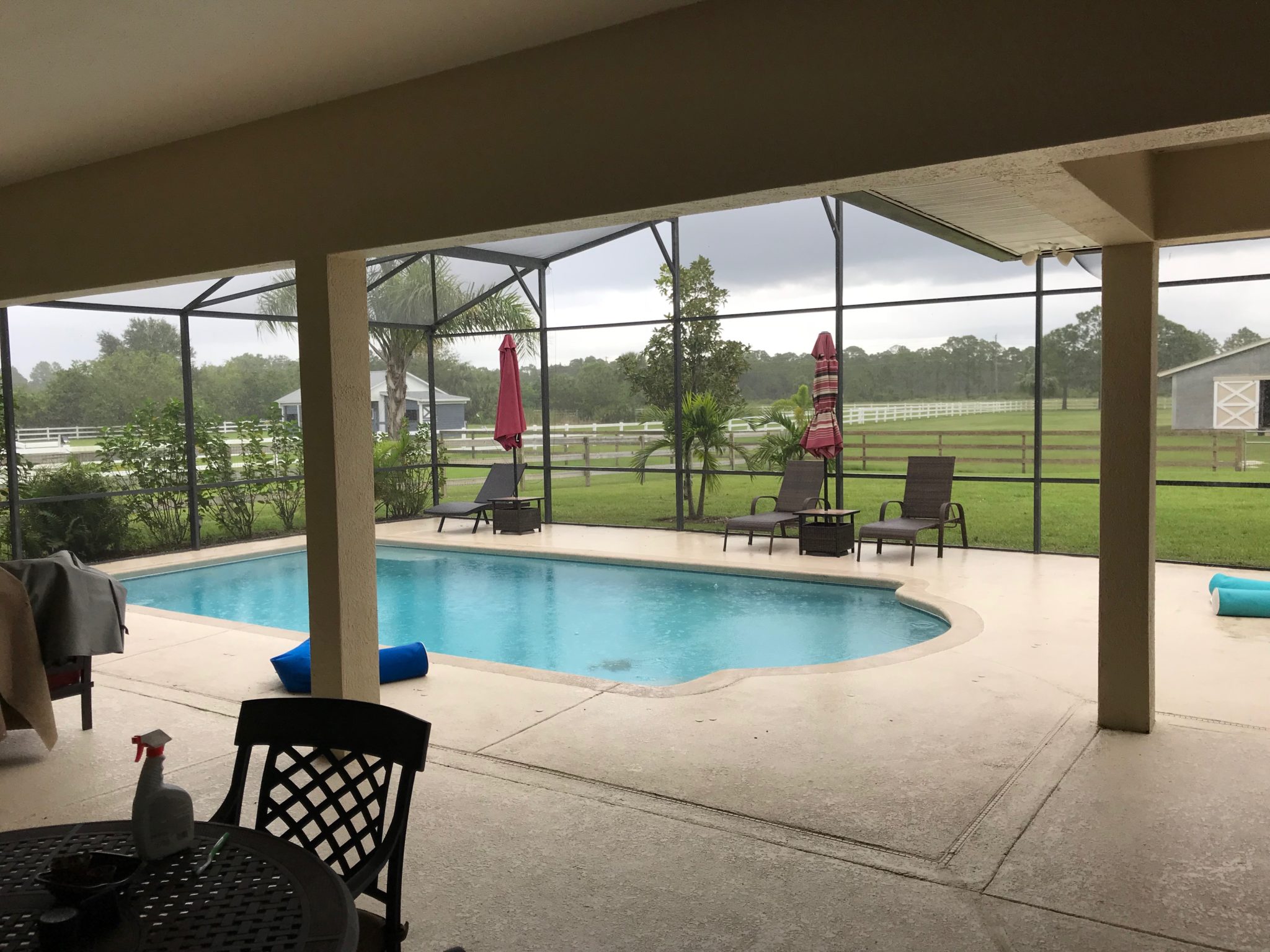
If you enjoy a bit of color while relaxing in your screen enclosure, there are ways to maximize tanning while still benefiting from insect protection and a more comfortable outdoor environment.
Here are some general tips.
Choose the Right Screen Type
If you are planning a new enclosure and tanning is important to you, let your contractor know. You can often select screen materials that balance UV protection with light transmission. A standard screen fabric may allow more tanning potential than a specialized solar screen.
Be Mindful of Time of Day
Sunlight is strongest in the middle of the day, usually between late morning and early afternoon. If you want to tan through your screen, that is typically when you will notice the greatest effect. Just remember that even filtered sun can still be intense, especially in Florida, so be careful not to overdo it.
Adjust Your Position
Where you sit or lounge inside your enclosure matters. Moving closer to areas with direct overhead sun or where the sun’s angle passes more directly through the screen can increase your exposure.
Always Consider Your Health
Even if the screen is blocking some UV rays, you can still burn, especially with prolonged exposure. Sunscreen, hats, and breaks in the shade are still important. Think of the screen as a filter, not a complete barrier. It can help reduce intensity but will not always remove the risks associated with UV exposure.
Why Choose BSS Exteriors for Screen Enclosure Installation in Palm Bay, FL
At BSS Exteriors, we have been designing and installing screen enclosures across Central Florida for decades. We understand how Florida’s sun, heat, and storms interact with your outdoor living space, and we use that knowledge to help you choose the right products for your lifestyle.
When you work with BSS Exteriors for your screen enclosure in Palm Bay, you can expect:
- Expert guidance on screen materials and mesh options to match your goals
- Custom designed enclosures that enhance both comfort and appearance
- Professional installation backed by almost forty years of exterior experience
- A team that takes the time to answer questions about sun, shade, and outdoor living
Whether you want maximum shade, a balance of sun and comfort, or just a beautiful space to relax without bugs, we can design a screen enclosure that fits your needs.
If you are ready to start planning your new screen room or update an existing enclosure, contact BSS Exteriors today and let us help you enjoy the Florida sun in comfort and confidence.